
Noisier fireworks
Views are sought on restricting noisier products for the general public, with louder products limited to professional users.
Fireworks are enjoyed by many for celebrations and cultural events. They are also a source of injury, distress and neighbourhood disruption when products, timing, noise and public use are not properly controlled.
The UK Government is asking for evidence and views on how fireworks and pyrotechnics should be regulated. FOLO-UP encourages people to respond, especially where they have experience of product risk, community harm, vulnerable people, pets, livestock, or anti-social use.
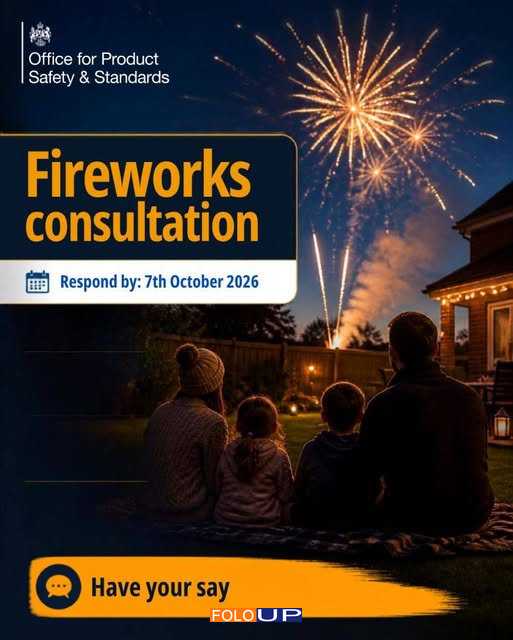
The challenge is not whether fireworks can be enjoyable. Many people value them as part of Bonfire Night, Diwali, New Year, weddings, cultural events and public celebrations. The public safety question is how the risks are limited so that enjoyment does not come at the cost of preventable harm or fear for others.
Complaints, petitions and parliamentary debates have raised concerns about noise, late-night disturbance, unsafe handling, anti-social behaviour, animal welfare, and the effects on people who are vulnerable to sudden loud noise. This consultation is part of the Government's Safer Streets Mission to tackle anti-social behaviour.
Views are sought on restricting noisier products for the general public, with louder products limited to professional users.
The consultation asks whether certain pyrotechnic products should be added to the existing banned-products list.
The rules for products currently treated as lower risk may be reviewed so the different risk levels are reflected more accurately.
Responses are most useful when they describe real situations and practical trade-offs. You may want to explain what risks you have seen, what protections would help, and how rules could be made clearer without stopping well-managed celebrations.
The factual claims in this article are based on the following official notices, research and reporting. Links open the original source.
Sources are checked during editorial review; dates and guidance may change on the originating website.
Selected reporting, official evidence and practical guidance connected with this article.
The Government consultation sets out the proposed changes to noise, prohibited products and lower-risk categories.
GOV.UKThe legal guidance covers age limits, permitted times, public places and the rules for buying and using fireworks.
HSEThe Health and Safety Executive explains the safety requirements for organising displays and handling fireworks.
These links open external websites. Their access terms and editorial responsibility apply.
Help other people find this consumer-safety information using the service that works best for them.
FOLO-UP does not load social-media trackers on this page. A platform is contacted only when you choose it.