
Known to be dangerous, still for sale: why marketplaces miss unsafe infant products
A July 2026 Which? investigation identified 150 potentially dangerous infant products across major marketplaces, including designs covered by public safety alerts.
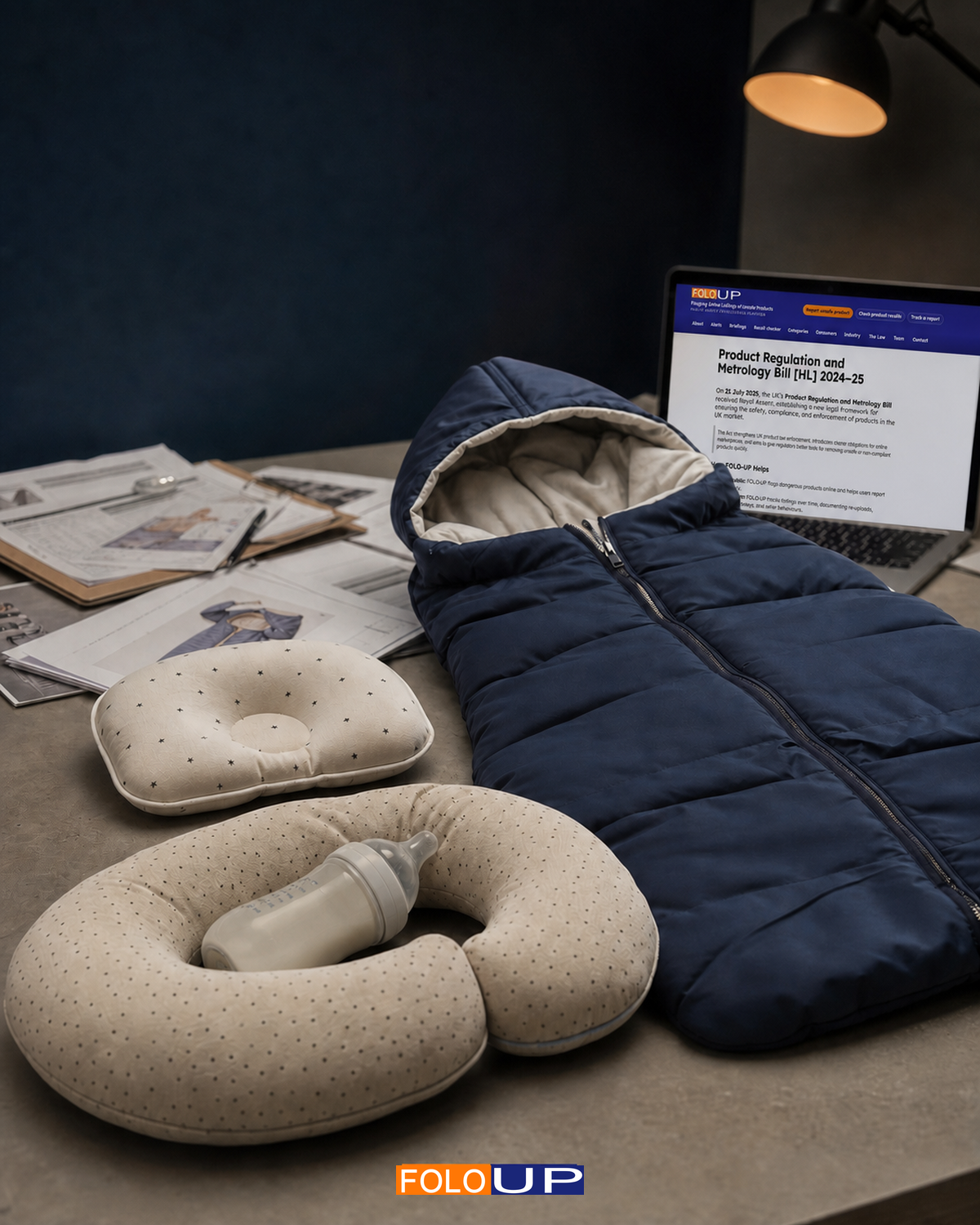
A July 2026 Which? investigation identified 150 potentially dangerous infant products across major marketplaces, including designs covered by public safety alerts.
At a glance
- 150 potentially dangerous infant products identified by Which?
- 59 sleeping bags; 54 self-feeding products; 37 sleep pillows
- Products were listed across seven major marketplaces
- OPSS says prop feeders can cause choking or aspiration pneumonia
- OPSS says baby sleep pillows can cause suffocation or overheating
Opening
A July 2026 Which? investigation found 150 potentially dangerous infant products still listed across Alibaba, AliExpress, Amazon, eBay, Etsy, OnBuy and TikTok Shop. The products were not all formal recalls or laboratory-tested items; Which? compared live listings with public safety alerts and product-safety guidance. FOLO-UP uses “potentially dangerous” unless a regulator has formally assessed the specific product.
What The 150 Items Were
The investigation grouped the products into 59 sleeping bags, 54 self-feeding products and 37 sleep pillows. Several hazards were visible in listing text or imagery: hoods and missing armholes on sleeping bags, pillows marketed for babies under 12 months, and prop-feeding designs intended to let an infant hold a bottle without a caregiver. A listing match is a reason to stop, verify and report; it is not proof that every unit has identical construction.
Why Props And Self-feeding Pillows Are Serious
OPSS PSA3 says baby self-feeding pillows and prop feeders allow bottle feeding without caregiver assistance or supervision and present serious harm or death risks from choking and aspiration pneumonia. OPSS says the risk comes from the design and intended use and cannot be mitigated by instructions. Consumers should stop using such products and dispose of them safely following the official advice.
Sleep Pillows
OPSS’s December 2025 alert says baby sleep pillows and cushions marketed for sleeping or unsupervised placement can cause suffocation and overheating, with potentially fatal consequences. Parents and carers should not use them for babies under 12 months or put them in a cot or crib; contact the business about redress.
Sleeping Bags
OPSS campaign guidance says a baby sleeping bag should have armholes and no hood and should fit correctly. A hooded bag or a bag without armholes should be treated as a warning sign, not a styling detail. Check age and size guidance and stop if the listing is unclear.
What To Check Before Buying
Look for a clear age range, product dimensions and manufacturer or importer information; reject listings that market sleep pillows for under-12-month babies, show a hooded or no-armhole sleeping bag, or promote bottle feeding without holding the bottle. Search the FOLO-UP recall and alert records, retain the URL and listing screenshots, and report suspected unsafe listings. Do not rely on star ratings, seller claims or a “tested” badge alone.
What Marketplaces Can Do
A URL takedown is not enough. Platforms should match product images, titles, identifiers and variants against safety alerts; review linked seller accounts; block re-listing across accounts; contact previous buyers where a product may have been sold; and recheck after removal. Which? reported that the marketplaces removed the flagged listings or began checks after contact, but the recurrence question remains: can a dangerous design return under a new title, image, seller or colour?
Scope And Fairness
The 150 count and category totals belong to Which? and The Guardian’s report of that investigation, not to an OPSS testing programme. FOLO-UP does not say every identified listing was recalled or that every visually similar item is identical. Formal risk findings should be attributed to OPSS alerts or other named authorities.
FOLO-UP briefing based on the linked official notices, research sources and dated evidence. Claims should be rechecked when circumstances change.