
Removed, relisted, resold: why deleting one unsafe listing is not enough
An OPSS report said listings for a serious-risk 500W plug-in heater had been removed from five marketplaces in December 2022. In June 2026, a Commons committee member said he found nine apparently identical heaters on eBay and bought four. The case exposes the gap between deleting a URL and suppressing a dangerous product.
Published by the FOLO-UP editorial team
What this briefing shows
An OPSS report said listings for a serious-risk 500W plug-in heater had been removed from five marketplaces in December 2022. In June 2026, a Commons committee member said he found nine apparently identical heaters on eBay and bought four. The case exposes the gap between deleting a URL and suppressing a dangerous product.
EDITORIAL THESIS
A takedown is an action against one URL. Product-safety enforcement succeeds only when the unsafe product, its variants, the seller network and previous buyers are dealt with—and when the product does not return.
THE DOCUMENTED OPENING
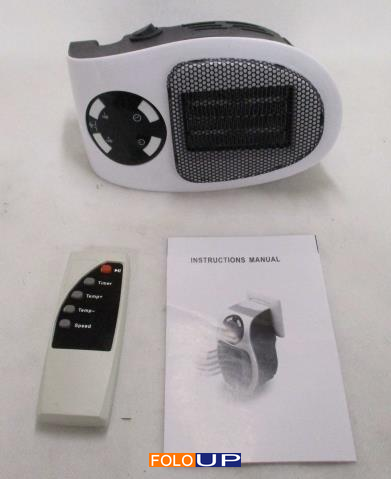
On 30 December 2022, OPSS published Product Safety Report 2212-0070 for a portable 500W plug-in fan heater presenting a serious risk of electric shock. The notice identified a barcode, an eBay item number and an Amazon ASIN and said listings had been removed from Amazon, eBay, Fruugo, Gumtree and U-Buy.
On 23 June 2026, Joshua Reynolds MP told the Commons Business and Trade Committee that he had searched eBay the previous night, found nine products he described as identical to that heater and bought four. eBay’s representative apologised, said the company would examine the cases and explained the difficulty of distinguishing a known unsafe unbranded product from a merely similar product.
That four-year timeline gives the briefing a stronger, evidenced frame than a general article about “whack-a-mole” enforcement.
CORROBORATING EVIDENCE
1. Which? reported in 2024 that it could list the same type of illegal heater on Amazon, eBay, Etsy and TikTok Shop, then relist it after removal from the same seller accounts.
2. Its January 2025 follow-up said an identical-looking heater was relisted on all four marketplaces two months later; the UK Government now cites this investigation in its 2026 framework consultation.
3. Which? told the Business and Trade Committee in June 2026 that a relatively simple image-matching tool had identified hundreds of recalled products across marketplaces.
4. eBay told the same Committee that it monitors roughly 80,000 known unsafe products and had blocked 21 million listings potentially offering unsafe products in the preceding year. Those figures should be presented as company evidence, not independently audited totals.
5. The EU eSurveillance Webcrawler scanned more than 1.6 million webpages in 2025 and found more than 20,800 webpages offering products already recorded in Safety Gate.
PROPOSED ARTICLE STRUCTURE
1. Removed: reconstruct the 2022 OPSS heater notice and the five-marketplace takedown.
2. Relisted: follow the heater through the 2023 Which? tests, the 2024 undercover listings and the January 2025 repeat test.
3. Found again: report the June 2026 Commons evidence and seek the outcome of eBay’s promised follow-up.
4. Why URL matching fails: changed titles, reused or altered images, missing identifiers, new seller accounts, category switching and cross-platform movement.
5. The “identical versus similar” problem: explain why appearance alone is not proof of identical construction, while asking what evidence should be required before a near-identical high-risk product can remain on sale.
6. What happens to previous buyers: notification, refund or replacement, safe disposal and evidence that the recall reached consumers.
7. From voluntary systems to enforceable duties: compare existing UK practice, the Product Regulation and Metrology Act 2025 powers, the March 2026 secondary-legislation proposals, and the EU’s GPSR and DSA duties.
8. The FOLO-UP recurrence test.
THE FOLO-UP RECURRENCE TEST
1. URL removal: was the notified listing removed promptly?
2. Product suppression: were known identifiers, images and close variants checked across the whole platform?
3. Seller enforcement: were linked seller profiles reviewed and repeat offenders restricted?
4. Cross-platform intelligence: was the product information shared in a machine-readable form that other marketplaces and regulators could use?
5. Buyer remediation: were purchasers contacted and offered an effective remedy?
6. Recurrence audit: did the marketplace check again after 7, 30 and 90 days and publish the result?
RIGHT OF REPLY AND REPORTING TASKS
Ask OPSS whether cases 2212-0070 and 2401-0139 remain active, what later surveillance found, and whether it can quantify relistings or affected consumers.
Ask eBay what happened to the nine listings raised in Parliament, whether all linked listings and sellers were reviewed, how many units had been sold, and whether buyers were contacted.
Ask Amazon, Fruugo, Gumtree and U-Buy what recurrence checks followed the 2022 notice.
Ask Which? for the underlying chronology, image-matching methodology and permission to reproduce any marketplace screenshots if required.
Capture current listings only as dated evidence, recording seller identity, URL, item number, image, price and claimed specifications. Do not purchase further products without a separate testing and evidence-handling plan.
ACCURACY AND FAIRNESS NOTES
Use “apparently identical”, “identical-looking” or “same product design” unless identifiers, supply-chain evidence or testing establish that products are identical. A visual match can justify investigation or a request for compliance documents, but it does not by itself prove identical internal construction or risk.
Do not say that the OPSS notice was a consumer recall: it was a Product Safety Report whose recorded measure was removal of marketplace listings. Attribute the June 2026 count of nine and purchase of four to Joshua Reynolds MP’s committee evidence.
Do not imply that every webpage found by the EU crawler was newly tested. The crawler was identifying online offers for products already recorded in Safety Gate.
The Product Regulation and Metrology Act 2025 provides powers for future rules. The detailed duties in the March 2026 UK framework were consultation proposals at the time of research and should not be described as already in force. Explain the separate position under EU law, including Northern Ireland where relevant.
REVIEW DECISION
Approve the 2022-to-2026 heater timeline as the central case study, commission right-of-reply questions, and move the briefing from research to drafting.