
From vapes to EVs: why “battery fire” is not a single risk!
Vapes, RC models, e-bikes, e-scooters and electric cars can all use rechargeable lithium cells. The chemistry may be related, but battery size, protection systems, charging behaviour and escape conditions change both the risk and the safe response.
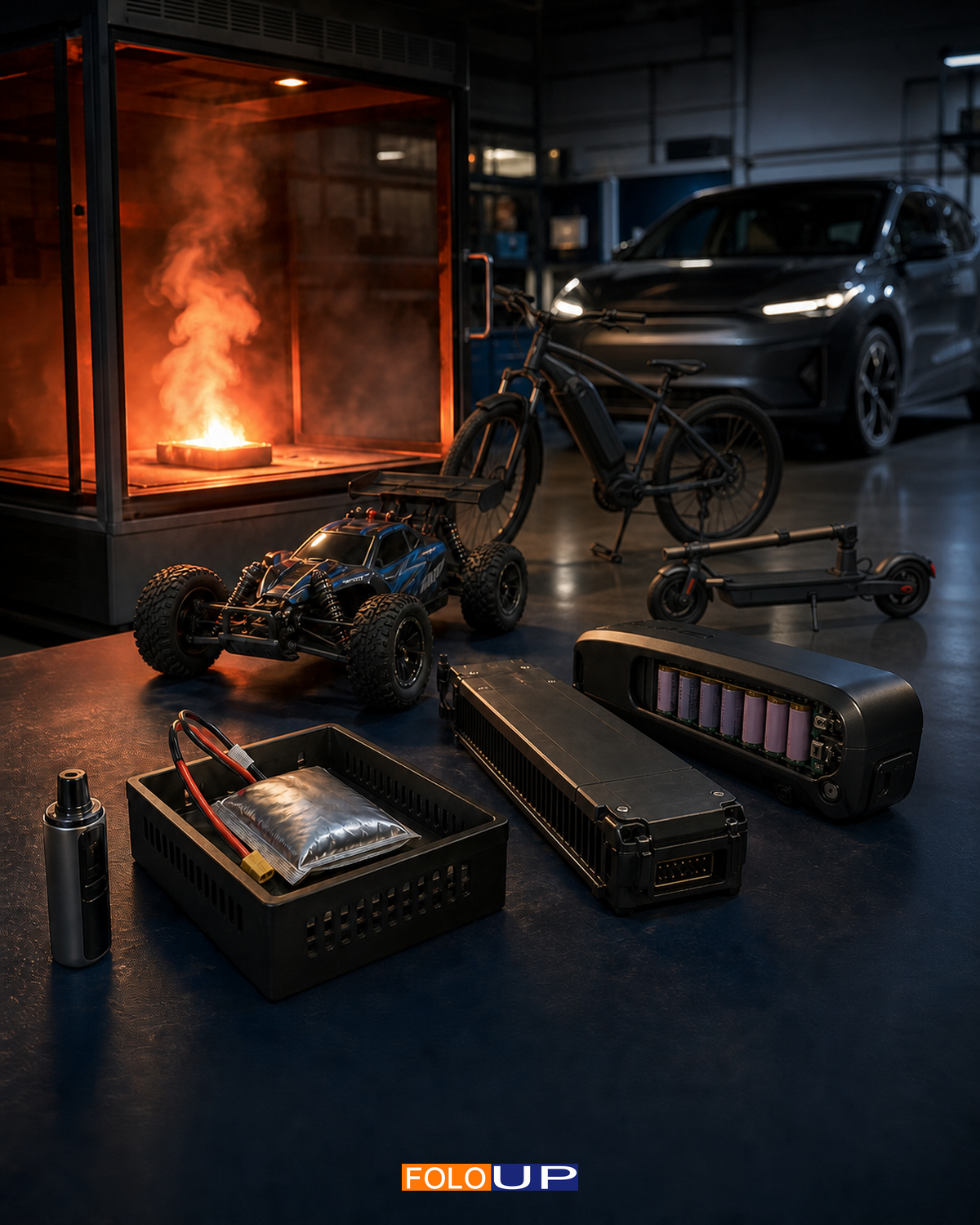
The common lesson is to buy carefully, use the correct charger, protect batteries from damage and act on warning signs. The precautions then need to match the product. A small cell short-circuiting in a pocket creates a different situation from a converted e-bike charging in a hallway or a damaged electric vehicle after a collision.
Possible triggers include a manufacturing defect, overcharging, overheating, an internal or external short circuit, crushing, puncture, water damage or an incompatible charger. The casing may look ordinary before the failure becomes obvious, so buying and charging habits matter as much as appearance.
OPSS published a separate set of management information for 2024. It received 211 voluntary notifications in which an e-bike or e-scooter was considered the most probable cause of a fire. The total included 170 e-bike fires, 39 e-scooter fires and two other personal-transport products. Of the e-bike notifications, 77 involved confirmed post-market conversions.
Charging status was known for 162 of the 211 incidents: 82 occurred while charging, 80 while not charging and 49 were unknown. Five fires resulted in eight disclosed fatalities, while 42 fires involved 86 disclosed non-fatal casualties. OPSS warns that reporting is voluntary, that 175 of the 211 notifications came from London Fire Brigade, and that the figures cannot be used to estimate a national incident rate.
The two datasets therefore answer different questions. They should not be added together or treated as a continuous trend. They do show why consumers need advice that reflects the product in front of them.
Do not leave a vape charging unattended or overnight, keep it uncovered while charging, and protect it from crushing, puncture, water and extreme temperatures. A loose rechargeable cell needs particular care: never carry it unprotected where its terminals can touch keys, coins or other metal. Do not use a cell with a torn wrap, dented casing or other visible damage.
Inspect the pouch, leads and connectors before and after use. Stop using a pack that is swollen, punctured, impact-damaged, leaking, unusually hot or no longer performing normally. Charge only while present and awake, on a stable non-combustible surface away from combustible materials and escape routes.
A charging bag or enclosure is not permission to leave a pack unattended, and not every product marketed as “fireproof” offers the same protection. Follow the battery and enclosure manufacturers’ instructions and do not rely on unverified suppression claims.
Buy from a trusted seller and keep the product, battery and charger as a compatible system. Use only manufacturer-recommended replacement batteries, chargers and parts. OPSS advises using a competent professional for a conversion or repair and never tampering with the battery.
Charge while awake and present. Keep the battery and charger uncovered, unplug them when charging is complete, and never charge or store the product in a hallway, stairway or another place that could block an escape route. Working smoke alarms and a clear way out are essential.
An EV battery damaged in a collision or involved in thermal runaway can release toxic gases, require prolonged cooling by firefighters and retain a risk of re-ignition. Government-commissioned covered-car-park guidance cites insurance-claim data in which annual fire claims per car were lower for electric vehicles than for petrol or diesel vehicles, while also warning about differences in fleet age and the limits of the data. Likelihood and firefighting consequences are separate questions.
Follow the vehicle manufacturer’s warnings after a collision, flood or charging fault. If the vehicle is smoking, hissing, venting gas or heating rapidly, move away, keep others clear and call 999. Do not approach the battery or try to investigate it yourself.
If rapid heating, hissing, venting, smoke or flame begins, do not pick up the product and do not attempt to fight the fire yourself. Leave the area or building immediately, close the door behind you if it is safe to do so, call 999 and tell the operator that a lithium battery is involved.
Use a retailer take-back point, household recycling centre or other service accepted by your local authority. Tell the facility in advance if a battery is swollen, leaking, damaged or recalled, and follow its instructions before transporting it. Never post or transport a battery that is hot, smoking, hissing or venting.
At a glance
- Insurer-led FOI responses counted 1,760 UK battery-linked fires during 2025
- OPSS received 211 voluntary e-bike and e-scooter fire notifications for 2024
- 77 of 170 e-bike notifications involved a confirmed post-market conversion
- 82 incidents occurred while charging, 80 while not charging and 49 were unknown
- The OPSS notifications disclosed 8 deaths and 86 non-fatal casualties
- If a lithium battery fire starts, leave immediately and call 999
Why One Phrase Covers Different Risks
A disposable vape, a loose rechargeable cell, a soft battery pack for a radio-controlled model, an e-bike battery and an electric-car traction battery can all be described in news reports as a “lithium-ion battery”. They are not the same product. Their stored energy, construction, protection electronics, charging equipment and surroundings are very different.
What Thermal Runaway Means
Thermal runaway is a self-accelerating reaction inside a battery cell. Heat causes further reactions, which produce still more heat. A failing cell may vent flammable and toxic gases, and heat can spread to neighbouring cells in a battery pack.
What The Numbers Can And Cannot Tell Us
The Guardian reported that Freedom of Information responses gathered for insurer QBE counted 1,760 UK fires linked to lithium-ion batteries during 2025, or roughly one every five hours. That figure combines several product categories and is an insurer-led collection rather than a single national official incident series.
Vapes And Loose Rechargeable Cells
Small batteries can fail close to the face, body, bedding or other combustible material. London Fire Brigade linked an August 2025 house fire to the failure of a vape battery and advises consumers to buy devices from reputable retailers, follow the supplied instructions and use the charger intended for the device.
Radio-controlled Model Batteries
High-discharge lithium-polymer packs used in radio-controlled cars, aircraft, boats, drones and similar equipment require the settings specified for that exact pack. Match the charger to the battery chemistry, cell count and permitted charge rate. Use balance charging when the manufacturer requires it, and select a storage-charge programme only when the pack instructions specify one.
E-bikes And E-scooters
Most e-bikes, e-scooters and their batteries are safe when used correctly. The risk increases when a product is counterfeit or poorly made, has been damaged, is paired with an incompatible charger, or is modified with parts that were not designed to work together.
Electric Cars
An electric car contains a much larger traction battery, but it also has integrated monitoring, battery-management electronics, structural protection and modules designed as part of the vehicle. The size of the battery affects the possible consequences of a fire; it does not by itself show how likely the vehicle is to catch fire.
Before You Buy Or Charge
- Check the seller, manufacturer, model and recall history before buying a device, replacement battery or charger.
- Choose the complete product, battery and charger as a compatible system and retain the instructions.
- Inspect the battery, cable, plug and charger before use. Do not improvise connections or charging modes.
- Charge only while awake and present, with the product uncovered and the escape route clear.
- Keep batteries away from water, excessive heat, crushing, puncture and loose metal objects.
- Stop using anything that overheats, deforms, swells, cracks, leaks, hisses, smells unusual, smokes or performs abnormally.
If A Battery Starts To Fail
If a battery is damaged or behaving abnormally but is not actively heating, hissing, venting or smoking, stop using and charging it. Do not puncture, dismantle or test it. Contact the manufacturer, retailer or an appropriate battery-recycling service for product-specific advice.
Disposal Is Part Of Fire Safety
Never put a vape, rechargeable cell or lithium battery in household rubbish or mixed recycling. Batteries can be crushed during collection or sorting and start fires in vehicles and waste facilities.
The Bottom Line
“Battery fire” is a useful warning, but it is not a single risk category. Match the charger to the product, keep batteries undamaged and away from escape routes, stay present while charging, and treat warning signs seriously. If a fire begins, your priority is escape and an immediate 999 call—not moving the battery or trying a home suppression method.
FOLO-UP briefing based on the linked official notices, research sources and dated evidence. Claims should be rechecked when circumstances change.