
E-bike conversion kits: the battery, charger and compatibility risk
An e-bike conversion is not just a motor added to a bicycle. The battery, charger, wiring, management system and installation have to work safely together—and online or second-hand parts can make that difficult to verify.
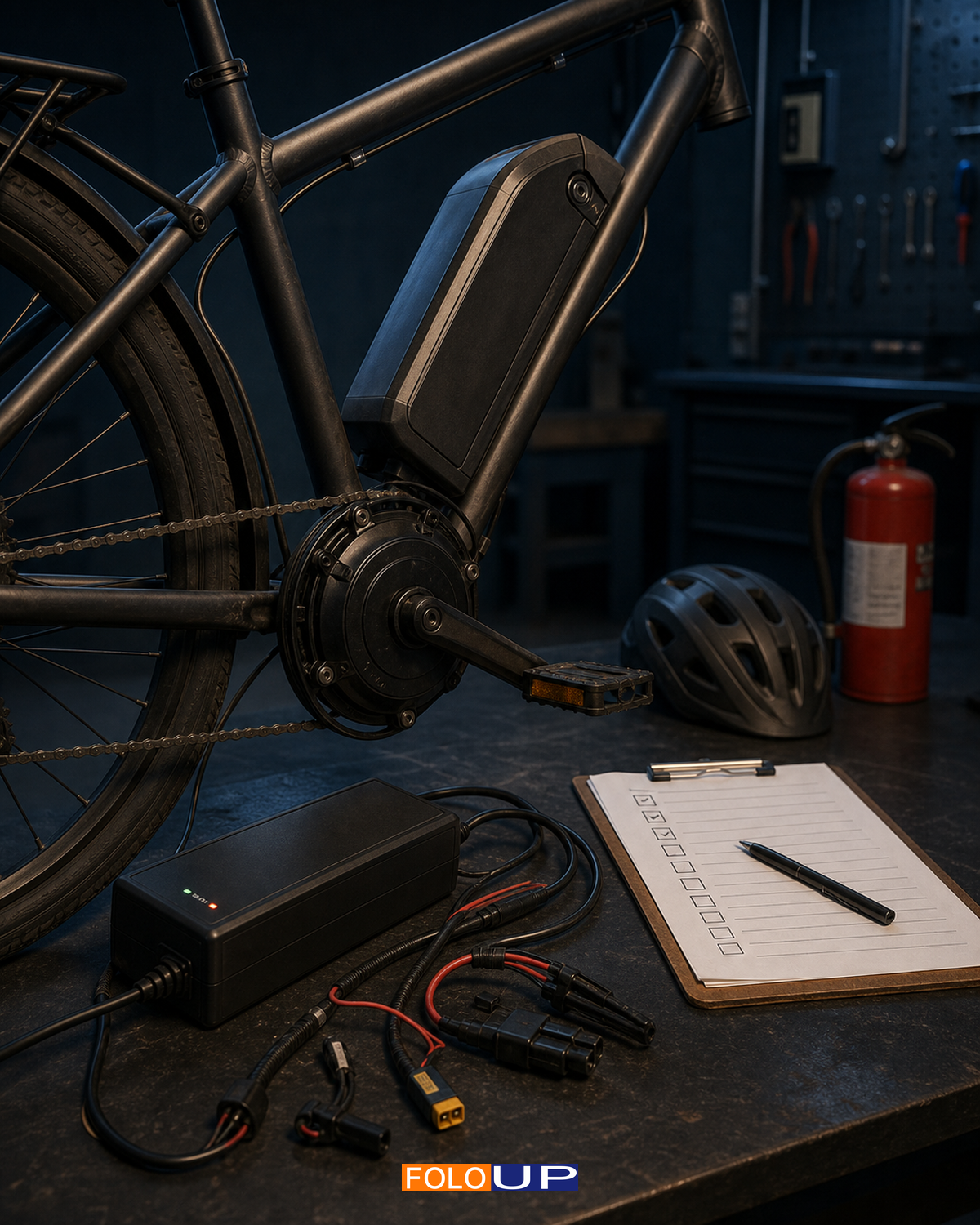
A conversion kit turns a conventional bicycle into a new electrical system. The safety question is therefore not whether one component looks genuine, but whether the battery, charger, wiring, motor and battery-management system were designed and installed to work together.
London Fire Brigade recorded 206 e-bike and e-scooter fires in 2025, including 171 involving e-bikes. The Brigade says its investigations often identify lithium-ion battery failure, conversion kits and chargers, and warns that products bought online which do not meet UK safety standards are particularly prone to failure. These are London figures, not a UK-wide total, and the Brigade does not attribute every incident to one cause.
The compatibility problem is built into the way many kits are sold. LFB notes that a kit may not include a battery or charger, so the owner may buy those parts separately from different sellers. A plug that fits is not evidence that the voltage, current, connector, charger profile and battery-management system are compatible. A damaged or degraded second-hand battery adds another unknown.
Lithium-ion failure can produce rapid overheating and thermal runaway. That is why charging location, physical condition and escape routes matter as much as the product listing. A charger should be the one specified for the battery; a damaged pack should not be modified, opened or put back into service.
For anyone considering a conversion, the practical checklist is short: buy from a reputable seller; keep the battery and charger as a matched system; avoid second-hand or visibly damaged packs; do not alter the battery; use the correct charger; and have the conversion installed by a qualified professional. Keep charging away from exits and sleeping areas, and follow the manufacturer’s instructions.
Road-legality questions and product-safety questions are related but not identical. A bicycle can be legal to use on the road and still contain a dangerous battery or charger; an improperly modified bicycle can also create separate road and insurance issues. This briefing focuses on fire and product-safety risk, not on deciding whether a particular conversion is road-legal.
The policy lesson is that a marketplace listing should make the complete system visible: compatible battery and charger specifications, responsible seller information, installation instructions, safety warnings and a clear route for corrective action if a pack is recalled.
At a glance
- London firefighters attended 206 e-bike and e-scooter fires in 2025
- 171 of those incidents involved e-bikes and 35 involved e-scooters
- London Fire Brigade says battery failure, conversion kits and chargers are often identified in investigations
- Separately purchased batteries and chargers can be incompatible
- LFB says damaged, counterfeit, overcharged or incorrectly charged batteries can fail
FOLO-UP briefing based on the linked official notices, research sources and dated evidence. Claims should be rechecked when circumstances change.