
AI toys, QR codes and digital product passports: what the new rules could change
A toy can now change through software, connect to a service or collect information after it has passed a physical safety test. UK and EU policy work is beginning to address that moving target.
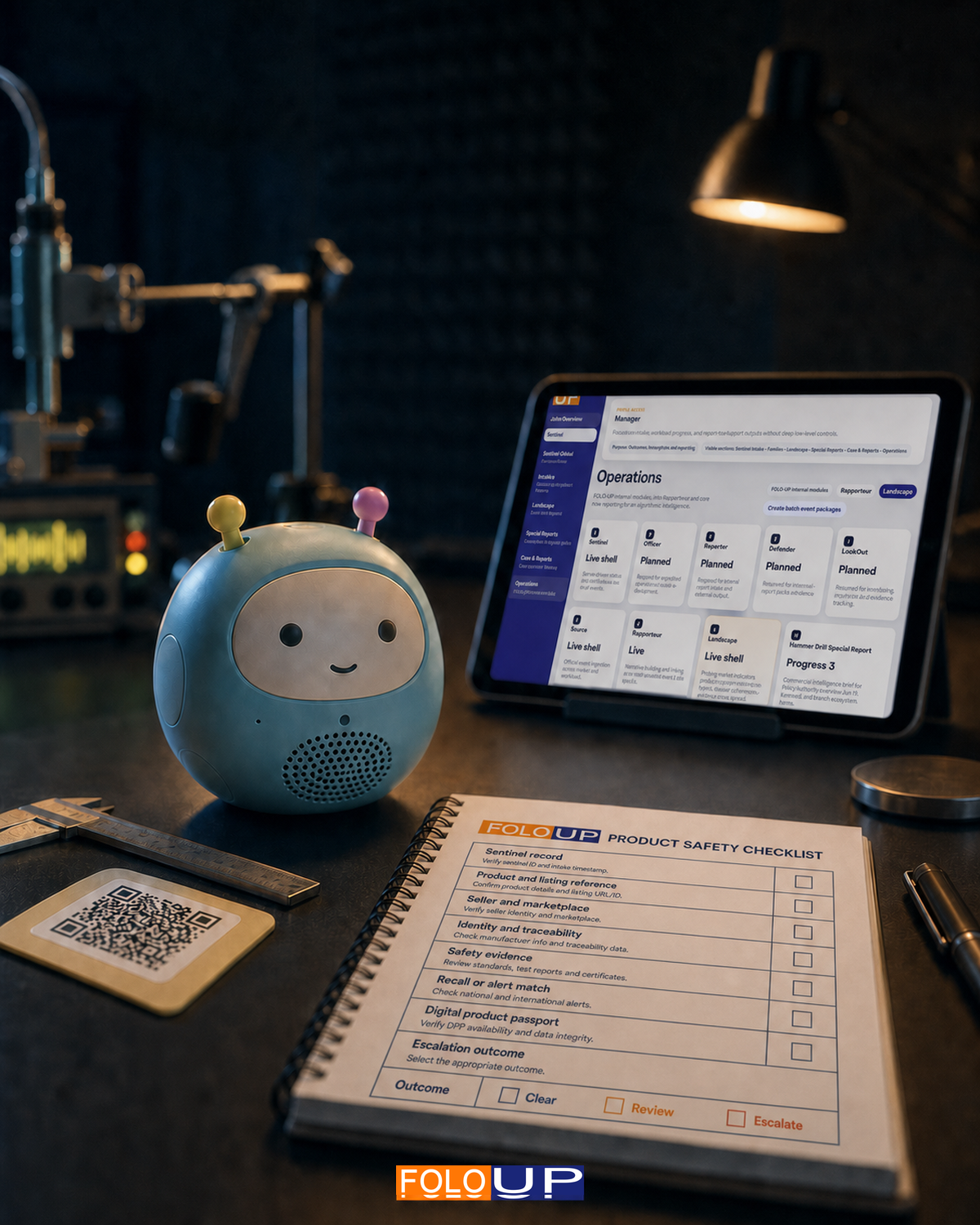
Toy safety used to be assessed mainly through physical construction, flammability and chemical composition. Connected toys add software, microphones, cameras, accounts and cloud services; AI-enabled toys add behaviour that may change when a model, app or service is updated.
On 6 July 2026, OPSS opened a UK call for evidence on whether Great Britain’s toy-safety rules should be updated. It closes at 11:59pm on 6 October 2026 and expressly asks about chemical safety, digital product passports, online marketplaces, connected toys and AI-enabled toys. This is evidence-gathering, not settled UK law.
The EU is further along a separate timetable. Regulation (EU) 2025/2509 entered into force on 1 January 2026 and is due to apply fully from 1 August 2030. Under the Windsor Framework it applies in Northern Ireland. The UK is considering how, and whether, to take a similar approach in Great Britain, so the two jurisdictions should not be presented as if they already share one rulebook.
A digital product passport is intended to make compliance information easier to find and update. The EU call material describes information such as the CE marking, customs commodity code and manufacturer contact details, made available through a QR code or similar data carrier. Marketplaces may also have to display a link to the passport, safety warnings and the CE marking.
Connected and AI-enabled toys raise a second question: what happens when the product changes after the original conformity assessment? The EU material points to possible interaction with the AI Act and Cyber Resilience Act. Certain AI systems could be prohibited or require additional assessment, while toy manufacturers still have to account for children’s particular vulnerabilities in their safety assessment.
Parents and carers should therefore ask for more than a reassuring product photograph. Before buying, look for a traceable manufacturer or importer, clear safety information, the data carrier or compliance information where supplied, a privacy explanation for connected features, and a published support route for updates and defects. A QR code is useful only if it resolves to information that is genuine, current and connected to the exact product.
The important distinction is between a proposal and a requirement. FOLO-UP will track the UK call for evidence, the final EU implementation timetable and the duties eventually placed on manufacturers and marketplaces. Until then, a digital passport is a policy direction, not a universal safety certificate.
At a glance
- The UK toy-safety call for evidence opened on 6 July 2026 and closes on 6 October 2026
- The EU Toy Safety Regulation entered into force on 1 January 2026 and fully applies from 1 August 2030
- Northern Ireland is covered by the EU toy regulation under the Windsor Framework
- EU digital product passports may be accessed through a QR code or similar data carrier
- The UK review expressly includes chemical safety, digital passports, online marketplaces and AI-enabled toys
FOLO-UP briefing based on the linked official notices, research sources and dated evidence. Claims should be rechecked when circumstances change.